

Team and Partnership Network
Dan Lewis – Chief Executive

Dan Lewis (linkedin profile) contributes frequently to the media, both as a journalist and broadcaster both on behalf of the Economic Policy Centre and Future Energy Strategies. These media outlets include LBC’s Breakfast Show with Nick Ferrari, the Daily Telegraph, the Guardian, CityAM, Al-Jazeera, Wall Street Journal, BBC Radio 4, Sky News, World Finance Magazine and the Yorkshire Post.
Dan’s recent publications have mostly been for the Institute of Directors – for a full listing, see his linkedin profile. Over the years he has done many others include; Recharging The Nation – The Challenge and Cost of Renewable Electricity Generation (2003), The Essential Guide to British Quangos 2005 , The Larceny of the Lottery (2007), and the Digest of Energy Statistics 2008.
Dan has also edited the following publications;
Electrifying Britain – forward with Coal, Gas or Nuclear? (2005), The New Economics of Energy Security (2006), Cost-Effective Defence (2006), Creative Destruction in the Music Industry – The Way Ahead (2006), Cracks in the Foundations? A Review of the Role and Functions of fhe Bank of England after TenYears of Operational Independence (2007), Playing with Monetary Fire (2007), New Nuclear Build in the UK – The Criteria for Delivery (2008), The Digest of Energy Statistics 2008, The Essential Guide to EU Quangos 2009 and Space: Britain’s New Frontier (2010).
Since graduating in 1994 in Modern Languages and History, Dan worked in financial organisations in the City of London and lived and worked in Luxembourg for four years until 2001. After this period Dan got more and more involved in consulting to policymakers, institutional investors and businesses and researching for the think tanks, the Economic Research Council and the Centre for Policy Studies.
An energy expert, Dan is also CEO of another company, Future Energy Strategies www.future-es.com – an energy reporting company that researches the energy industry of tomorrow and has driven the development of the EPC’s first platform – www.ukcrimestats.com – the leading independent crime and postcode data research and analysis platform. He also worked part-time for the from 2011 to October 2018 as Senior Energy and Infrastructure Adviser.
Professor Dr Tim Evans – Chairman

Professor Dr. Tim Evans MBA is Chairman of the Economic Policy Centre and a Professor of Business and Political Economy at the Schools of Business and Law of Middlesex University London.
He has previously worked as a Consultant Director with the Adam Smith Institute, and the Chief Executive of the educational charity, The Cobden Centre. He is also Chairman of Global Health Futures Ltd.
A former President and Director General of the Centre for the New Europe (2002-2005) in Brussels, between 1993 and early 2002, he was the Executive Director of Public Affairs at the Independent Healthcare Association in London where he oversaw the political affairs and public relations of the UK’s independent health and social care sector. In this role he was widely credited as being the major driving force behind the ‘2000 Concordat’ which was described by the Financial Times as the most “historic deal in 50 years of British healthcare”.
Prior to that, in 1991, he was the Head of the Slovak Prime Minister’s Policy Unit in Bratislava where he worked alongside Dr. Jan Carnogursky. In the late 1980s he was the Assistant Director of the Foundation for Defence Studies and subsequently became a Senior Policy Consultant at the Adam Smith Institute. In 1993, he was awarded his PhD from the London School of Economics and is close to finishing an MBA with the Open University. A political sociologist specialising in economics, he has taught at a number of academic institutions over the years including teaching post-graduate students Social Policy at London’s Guildhall University and the Economics and Politics of the Future on the Strategic Command Course of Britain’s national Police Staff College at Bramshill. Since 2007, he has been a member of the Mont Pelerin Society.
A regular commentator on television and radio, his articles have appeared in the Guardian, Economist, Financial Times, Wall Street Journal Europe and a host of other newspapers around the world. The author of numerous books, monographs and articles he has been published by public policy institutes that include the Adam Smith Institute, Centre for the New Europe, Fabian Society, Institute of Economic Affairs, The Cobden Centre, Economic Policy Centre, Fraser Institute and the Heritage Foundation – to name but a few.
________________________________________________________________
Senior Fellows
Professor Forrest Capie
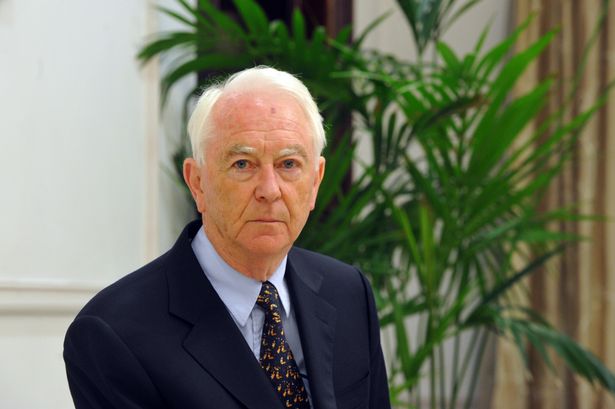 After working as an accountant for Ford Motor Company and as a civil servant in the Department of Trade and Industry in New Zealand, Professor Capie read economics and economic history at the University of Auckland and the London School of Economics. Amongst many books, he has written ‘Depression and Protectionism‘ and was co-author of ‘The Inter-War British Economy‘. He has also written papers on monetary and trade history and was editor of The Economic History Review from 1992-1999. He served on the Shadow Chancellor’s advisory council from 1999 to 2004, and on the Shadow Monetary Policy Committee from 2002 to 2004. Today, as well as being the Professor (Emeritus) of Economic History at the Cass Business School, Forrest is the Official Historian of the Bank of England for whom he is currently writing the next instalment in the history of the BoE.
David Kern

David Kern is Chief Economist at the British Chambers of Commerce (BCC). He is also running his own independent macro-economic consultancy, Kern Consulting. David Kern comments on behalf of the BCC on economic policy issues, and his comments are quoted regularly in the media and the financial press. As Chief Economist, David Kern is responsible for preparing the BCC’s economic forecasts, and is closely involved in the analysis and presentation of the BCC’s Quarterly Economic Survey (QES). Before setting up in 2000 his independent macro-economic consultancy, David Kern was for more than 17 years NatWest Group’s Chief Economist and Head of the Bank’s Market Intelligence Department. As part of his work at NatWest, he was responsible for the economic and financial forecasts used in the bank’s strategic planning, and for NatWest’s economic work on country and credit risk assessment.
In his consultancy work, David Kern provides tailor-made consultancy and advice to clients on a wide range of economic issues. He focuses on global & UK economic forecasts, monetary policy, the currency markets, interest rates, the bond markets, country & credit risk assessment, and UK regional developments. David Kern speaks regularly on economic issues at professional gatherings, and he contributes frequently articles to leading professional journals. David Kern holds an M.Sc. (Econ) from the London School of Economics and Political Science (LSE). He is a Fellow of the Royal Society of Arts (RSA).
Professor Graeme Leach
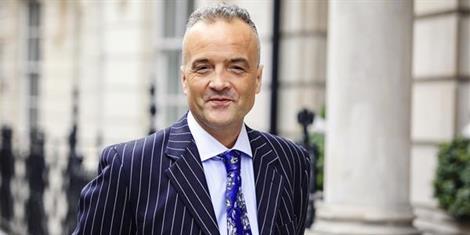
Graeme Leach is CEO and Chief Economist of Macronomics, a macroeconomic, geopolitical and future megatrends research consultancy, aimed at financial markets across the globe. He is also a member of the IEA’s Shadow Monetary Policy Committee, a visiting professor of economic policy, and writes a weekly column for the City AM newspaper.
He is a former Chief Economist & Director of Policy at the Institute of Directors (IoD), between 1998 and 2014. Whilst at the IoD he gave over 1,000 speeches (in over 25 countries), and undertook 100s of television and radio interviews on the UK and global outlook and economic policy issues. At the IoD he established a substantial reputation for calling the economy ‘right’, time after time.
In 2006 he was appointed to the Shadow Chancellor’s Commission for Tax reform. Prior to joining the IoD he was economics director at the Henley Centre, analysing future economic and social change. In 1998 he was awarded the WPP Atticus Award for original published thinking on futures issues. Previously Graeme has worked as economic adviser to the Scottish Provident Investment Group and as a senior economic consultant with Pieda. He is a frequent media commentator and in recent years has spoken at conferences in the USA, China, Germany, Italy, France, Spain, Sweden, Ireland, Belgium, Greece, Taiwan and even Zimbabwe!
Dr Tim Leunig

Tim Leunig is Chief Scientific Adviser and Chief Analyst at the Department for Education. He is also Associate Professor of Economic History at the London School of Economics.He holds a PhD in economics, and has written widely on current and historical economic issues.
He is a fellow of the Royal Historical Society, the Royal Statistical Society, and the Royal Society of Arts.
Tim was a Reader in Economic History at the London School of Economics where he taught and lectured in 19th- and 20th-century economic history. He has advised government, parliament and all three of Britain’s main political parties. Tim was awarded an LSE teaching prize in 2006 and in 2002 and was the first person at LSE to be awarded two teaching prizes. His fields of expertise include; the effects of new technology on productivity in Britain, 1800-2000, Links between learning-by-doing, labour turnover and labour productivity, the effects of industrial structure on the British cotton industry, the determinants of heights in Britain, the performance of railways in Britain, 1840-2009 and last but by no means least, economic geography.
Dr Richard Wellings

Dr Richard Wellings is the Deputy Editorial Director at the Institute of Economic Affairs. He is deputy editor of the journal Economic Affairs and works on the production of the IEA’s monograph series. Richard is the editor of the IEA blog and the author of several papers and reports examining economic policy issues from a free-market perspective.
Richard Woolhouse

Richard is Chief Economist of the British Bankers Association. Before this he was the Head of Tax and Fiscal Policy at the Confederation of British Industry (CBI). He has a background as a City Economist (Citi, CSFB) and in consulting (McKinsey) and has worked at HMRC and HMT. Richard has a double first class degree from Cambridge University.
Space Fellow
James C. Bennett

Jim Bennett (email Jim here) is author of the EPC’s second research paper, SPACE: BRITAIN’S NEW FRONTIER published in September 2010. Jim’s career over the last 30 years in and about the space industry and related policy and academic world is very extensive. Today he is a leading expert on the space policymaking environment, as the President of
Wyoming Aerospace LLC, Laramie, WY which specializes in space regulatory, policy and business subcontracting support primarily to entrepreneurial start-ups in the space, IT, and medical telecommunications fields. Jim has served as a member of the U.S. Secretary of Transportation’s Commercial Space Transportation Advisory Committee (COMSTAC) from 1992 to 1994, was a member of the White House Task Force on Space Commercialization, 1983 and has been Invited to give witness before the U.S. House of Representatives and the California legislature.