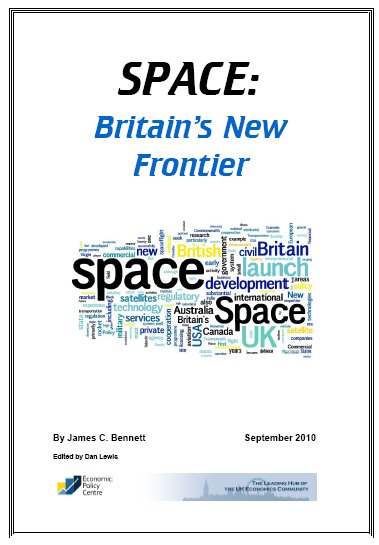

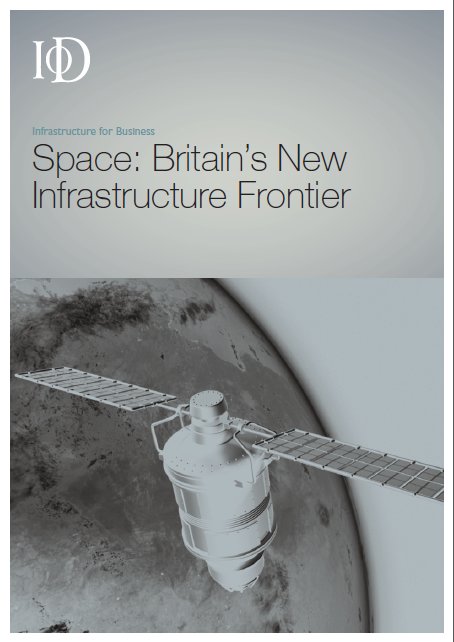
 Last week I was humbled by the scale of the media response to a report I authored for the Institute of Directors – Space: Britain’s New Infrastructure Frontier – where I work part-time as a Policy Adviser. The media went big on the spaceport angle, some journalists even telling me that this was new and they were bored of being told by the industry of how good we are at small satellites !
So being quoted in The Sun and the Financial Times (paywall) on the same day and right across radio, TV and local newspapers as well is certainly a first for me. A special thanks then to the many people I have spoken to and my excellent colleagues at the IoD for all the work they have put in to drawing this together – unless you’ve done it, you wouldn’t believe the volume of time and effort required in producing a paper.
Secondly, taking note of the feedback I’ve since had, I thought it would be helpful to develop some of the points made in the report and address some of the comments that have since emerged which I’ve put in below, roughly, in quotes. So here goes;
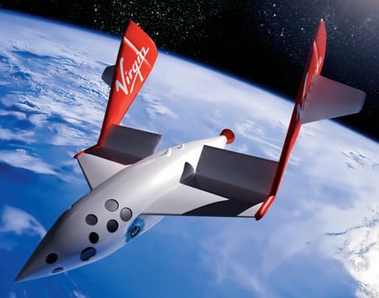
Spaceports 1: “You can only have a spaceport close to the equator“. No, this is only true if you are trying to launch a massive rocket like Ariane 5 and reach geostationary orbit – 22,000 miles up. At no point did the report suggest this was an option from the UK. Instead, we focussed on the fairly immediate opportunities for sub-orbital flight (40 – 100 miles up – Xcor Lynx and Virgin Galactic launching in 2013 and others following in close succession) and in the not too far-off future, maybe just over 10 years time, orbital flight using craft like Skylon or more likely, the next generation of air-launched Virgin Galactic vehicles or a number of other players which will mostly take off from a runway.
Spaceports 2: “We don’t need experimental hybrid space/airports, we already have Farnborough etc.“. Yes, but they don’t have easy access to space.
The future of Satellites: “Satellites are only any good if you launch them from a big heavy rocket near the equator“. So why is so much work going on by big companies like Boeing into air-launch which could be ready by 2020 and could conceivably launch from the UK let alone the growth of miniature CubeSats that are for low-earth orbit?

Space Tourism: “This is not real space exploration or business“. Quite the most otiose comments were made along these lines – since when did the UK turn down opportunities to sell tourism or business?
The point about Space Tourism is that it is very like the Barnstorming or Joyrides in biplanes of 1920s America which sowed the seeds of civil aviation. Almost 100 years later, suborbital flight will also be carrying joyriders or tourists – but the more technical term would be voluntary citizen underwriters who are going to make the science cheaper. These are flight-funded operations and so every successful flight gives them more investment capital and knowledge to extend the range and capabilities of the craft and bringing down the price for the rest of us.
Sub-orbital flight – 1: “Sub-orbital flight is still only tourism – not hardcore spaceflight or research“. No, this is just not true. There is huge excitement in the scientific world about the low cost research opportunities that will be opened up by VG and XCOR. The Southwest Research Institute has already purchased 6 seats for its researchers to conduct experiments on VG and another six on XCOR along with scientific payloads. Citizens in Space has bought 10 suborbital spaceflights from Xcor. The costs of doing small experiments in space will be dramatically lower and the queue – a high factor lower. And that’s just for the Americans. A spaceport for suborbital craft in the UK opens up quick, cheap and easy access to research for British-based researchers that wasn’t there before. Telescope time above the atmosphere is going to cost $50,000 rather than $10 million for example. Here is an image of a payload that can be loaded up to Xcor Lynx;

Runway length: “You only want a long runway for Skylon – if it ever gets built“. Actually, Spaceport America is currently being lengthened for Virgin Galactic’s existing craft by 2,000 feet from 10,560 feet to 12,560 – not far short of what Skylon would need. I agree that the funding hurdle is high for Skylon and said that in the report although Reaction Engines have delivered on everything they said they would thus far. In any event, sooner or later we will need big runways near all major urban areas to accommodate transcontinental hypersonic transports – the noise will be great, so no way will they be allowed into Heathrow !
Regulation: “If we don’t have strict safety regulation from the start, a fatal accident could kill off the industry before it gets going“. I doubt that – did we stop trying to cross the Atlantic after the Titanic sank?
Still, if we want any space flight from the UK, getting this sorted comes first. The UK currently has no regulations governing flight, safety or the environment for trips out of atmosphere and into space or for that matter, to govern a spaceport. This is currently a matter of great debate in the UK Space Community. Should we more or less wholesale adopt the American system which has already helped foster a burgeoning sub-orbital industry or should we pursue our own path of certified aviation?
Whatever you think would be best, the clear answer is that with no regulation in place, investors will not come. My instinct is to go with the former as there is a real risk that if we choose to embrace the latter – investors won’t come at all.
Sub-orbital flight 2: “Who needs to go up in suborbital craft when you can high up enough in a baloon or experience zero-g in an aircraft on a parabolic dive?” There are major qualitative differences with both the timespan and conditions of microgravity and exoatmospheric position. Aircraft parabolic flight gives you maximum 30 seconds of microgravity – not enough time for many experiments to unfold. Suborbital flight could give you 5 minutes. The International Space Station is a very expensive alternative with a lot of other stuff going on and a long queue. There’s lots you can do with a suborbital craft that you can’t do with a baloon. The next Xcor Lynx for example could launch two CubeSats which would lower substantially their already low costs into orbit – $52,000 for one educational cubesat according to this estimate ;

Paying for the Spaceport: “What do taxpayers want to pay for this for?” This is always the right question to ask. The good news is that;
a) For a sub-orbital spaceport to launch XCOR Lynx or VG White Knight, we are talking figures in the mere tens of millions of pounds and possibly much less. What’s that compared to High Speed 2?
b) We are now in an age where the taxpayer doesn’t have to pay for the infrastructure – there are any number of deals that can be done here. But first we have to accept the idea that having a spaceport in the UK is possible.
BSkyB and the UK Space Industry: “Sky TV is not the UK Space Industry“. Well all the official figures as compiled by the government and industry certainly do include it. It’s a bit like all the Commonwealth advocates who quote big figures for the size of the Commonwealth as a unit, when the biggest part is obviously India ! The report however did explicitly make clear that Sky was a big part of the UK Space Sector. Sky has driven the demand for High Definition, On Demand and 3D Television which because we are a nation of Telly addicts, has given us core niches in satellite technology.
Ok, so there you have it. Some of us – like me – don’t watch Downton Abbey because we dare to believe that our best days are not behind but ahead of us. And I for one, can see the UK Space Sector playing an important part in that, if we have the imagination to accept that it is possible.
A special thanks finally to our excellent Space Fellow, Jim Bennett, for his help and advice over the last 2 years. Apart from having 30 years background in the commercial space industry and being an experienced space entrepreneur, he is an acknowledged expert on Spaceport location criteria. So please email him on jim@economicpolicycentre.com if you are interested in exploring the great opportunity that a spaceport presents.