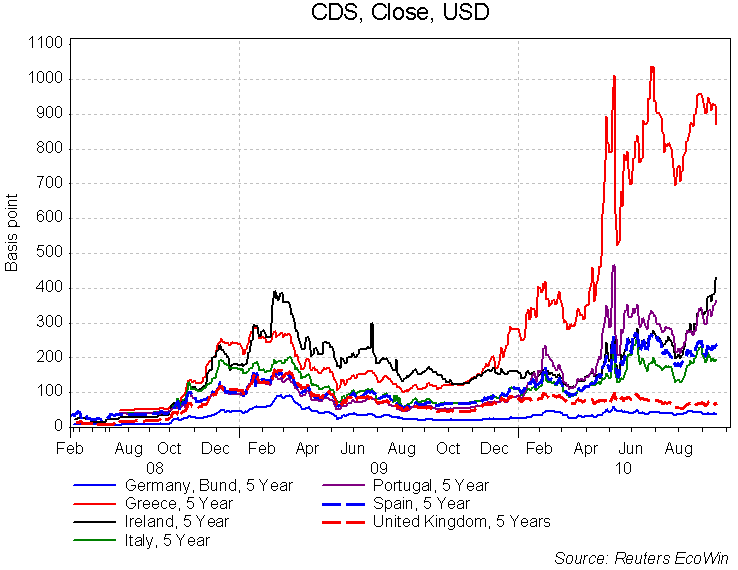
The Q2 growth figures may well have impressed us at 1.1% but it would be mistaken to believe we were well out of the woods just yet. Jim Rogers – he who infamously said the UK was finished a year or so ago – now predicts a recession in 2012. A technical recession, 2 consecutive quarters or more of declining growth still seems fairly unlikely but a single negative quarter is quite on the cards. So what should we look out for that might indicate this is happening?
1. House prices – already falling again, on a monthly basis. There could be much worse to come if Capital Economics is right, a 5% fall this year, 10% in 2011 and 10% again in 2012. And NIESR is today talking about a real terms decline in house prices below inflation over the next 5 years, taking the average home back to 2003 levels. The bottom line is that house-owing consumers will be less inclined to spend if they think the value of their homes is going down, a lot, for some time.
2. Unemployment – the big surprise of the recession is how little it went up. We’re now at 7.8%. But there’s a lot of people working part-time who’d rather be working 9-5, or who took pay cuts to hold onto their jobs, and with bank balance sheets still as weak as they are, there’s not much credit to fund investment in new jobs which would be normal at this stage of the cycle.
3. What’s happening in America – if you accept that the UK is around 6 months behind the USA in its cycle, then the slowdown in the US economy driven by US consumer sentiment and renewed housing worries is troubling indeed.
4. What’s happening in Euroland – not much good news from there either – some sort of breakup of the Euro is still on the cards, probably just postponed and growth is anaemic.
5. Sterling – there were high hopes that the pound’s fall in value of around 25% against the dollar and the euro which started in summer ’08 could help lead us out of recession with more competitively-priced exports. Unfortunately, the UK is starting to look like a relatively safe haven and Sterling is going up again. It’s quite possible before the end of the year that it may reach 1.75 against the dollar and 1.40 against the euro not because that’s what it’s worth but because all currency movements have a habit of overshooting. That will obviously hurt exports, but would reduce the cost of government debt as gilt yields are driven down by investors. Which makes me think, what is the precise trade-off on that one?
Anyway, if we’re going to have a negative quarter – and obviously, I’d much rather be wrong – I would bet on it happening in Q1 of 2011.